Overview
One More Dungeon is a first-person magic shooter where players step into the role of the younger brother, navigating a handcrafted dungeon campaign designed by his older brother, the Dungeon Master. Each dungeon reflects a pivotal memory from their shared past, blending emotional storytelling with tactical gameplay.
As the campaign unfolds, players unlock new Artifact Cards, encounter new enemy types, and face evolving trap combinations—learning to out-think opponents and create synergies through spell-based combat, as the brothers experience an adventure together in this Dungeon of Memories.
Documentation
Defining the World Through Constructed Fantasy
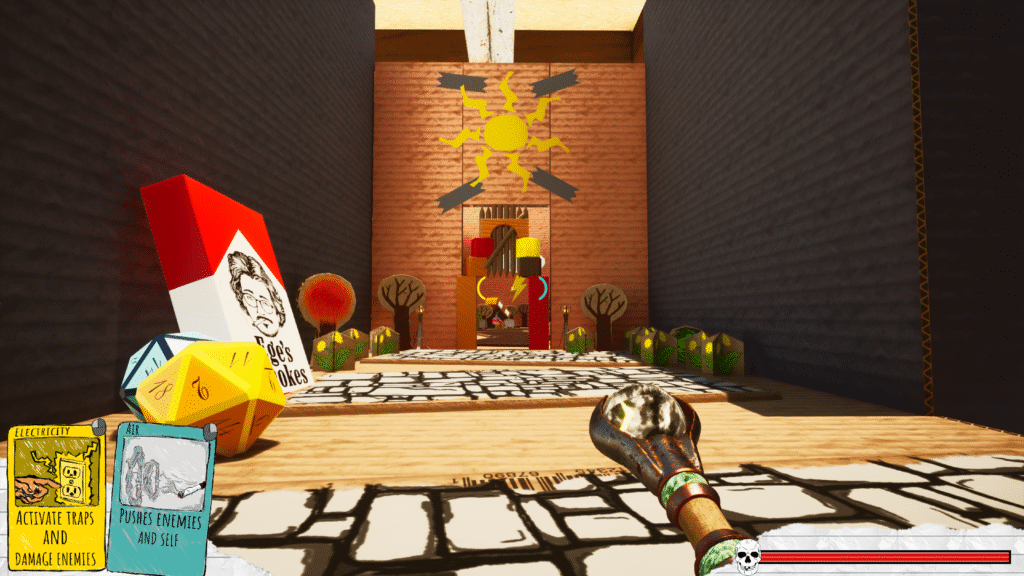
I owned and maintained the GDD for One More Dungeon, especially during a major shift in core mechanics after pre-production. One of the core pillars I defined was the concept of constructed fantasy a magical world built from everyday materials, reflecting the Dungeon Master’s attempt to recreate wonder from memory.
This idea led to the cardboard art direction, and the GDD served as the foundation for aligning this tone across the entire team.
It allowed the Art team to maintain visual consistency while reinforcing the narrative theme through environment and prop design.
Level Design
Designing Through Destruction and Discovery
My original level layouts had to be scrapped when the game shifted from a traditional FPS with special abilities to a combat puzzle shooter centered on tactical trap interactions. This pivot fundamentally changed how levels were structured and how gameplay unfolded.
We introduced a new design pillar called “Mind Over Might” to guide our approach:
“One More Dungeon should encourage players to think tactically, using artifact cards to manipulate enemies and lure them into traps. It’s a test of quick thinking and strategy, prioritizing clever decision-making over mindless action.”
With no reusable layouts, I adopted a rapid design workflow—building, testing, destroying, and rebuilding spaces based on how well they supported this new direction. Every encounter had to enable puzzle-like scenarios and reward thoughtful play over reflexes.
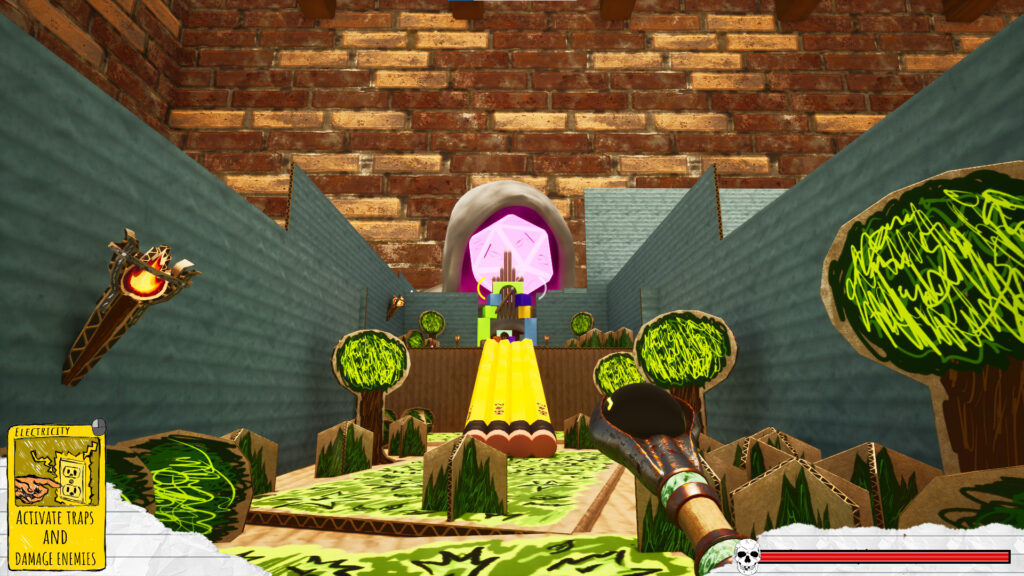
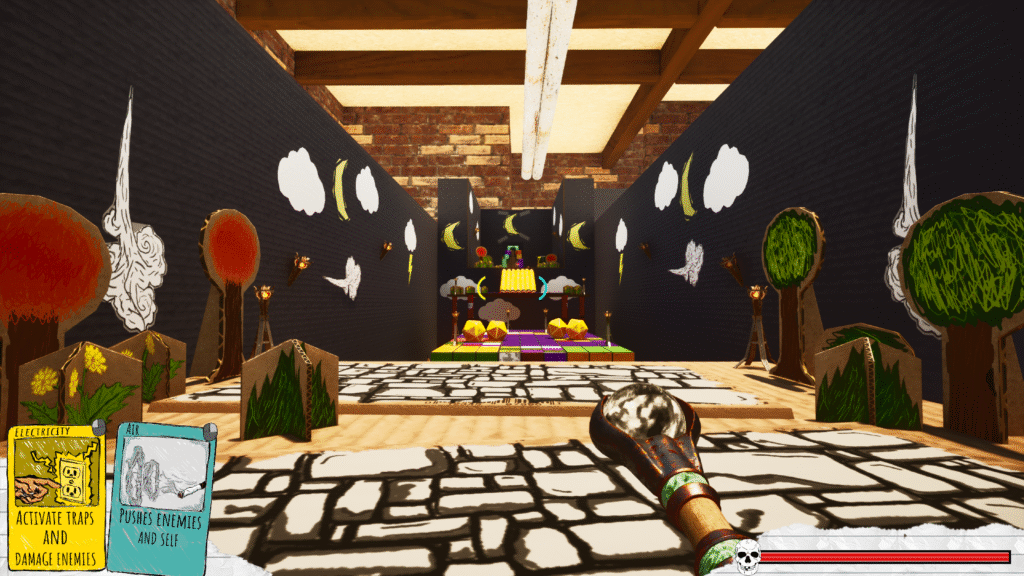
Tutorialization Through Level Flow
In One More Dungeon, every level was built around two distinct spaces—Passageways and Arenas—each serving a specific purpose in onboarding, storytelling, and gameplay pacing.
Passageways: Learn, Listen, Prepare
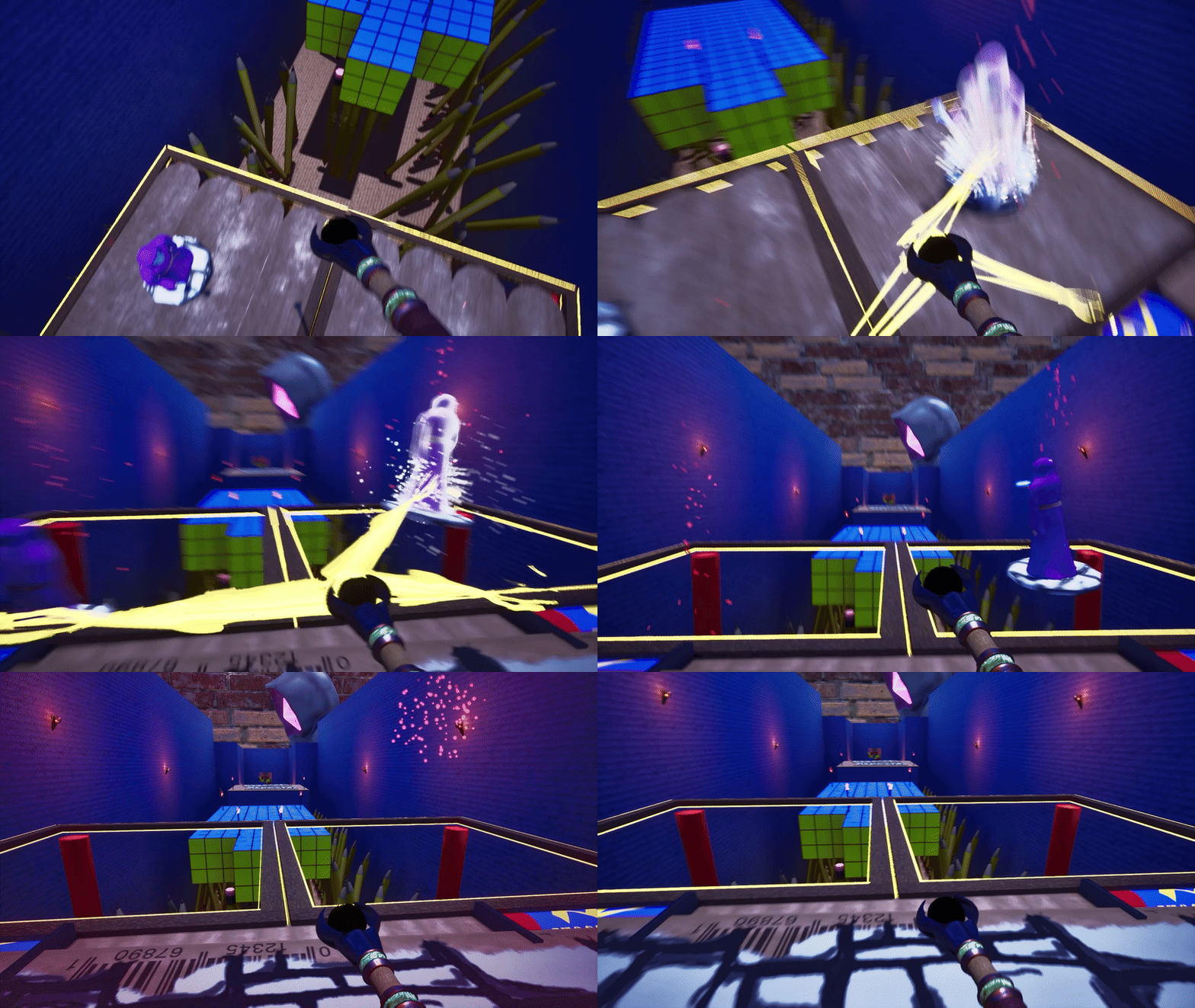
Passageways are low-pressure, safe spaces where players acquire and experiment with new skills, such as the Wind Card. These sections are carefully designed to:
Introduce mechanics through visual cues (e.g., sticky notes)
Reinforce concepts through Dungeon Master dialogue
Deliver light narrative moments and clues without overwhelming the player
Build confidence by allowing skill use in controlled scenarios
Example:
The player acquires the Wind Card
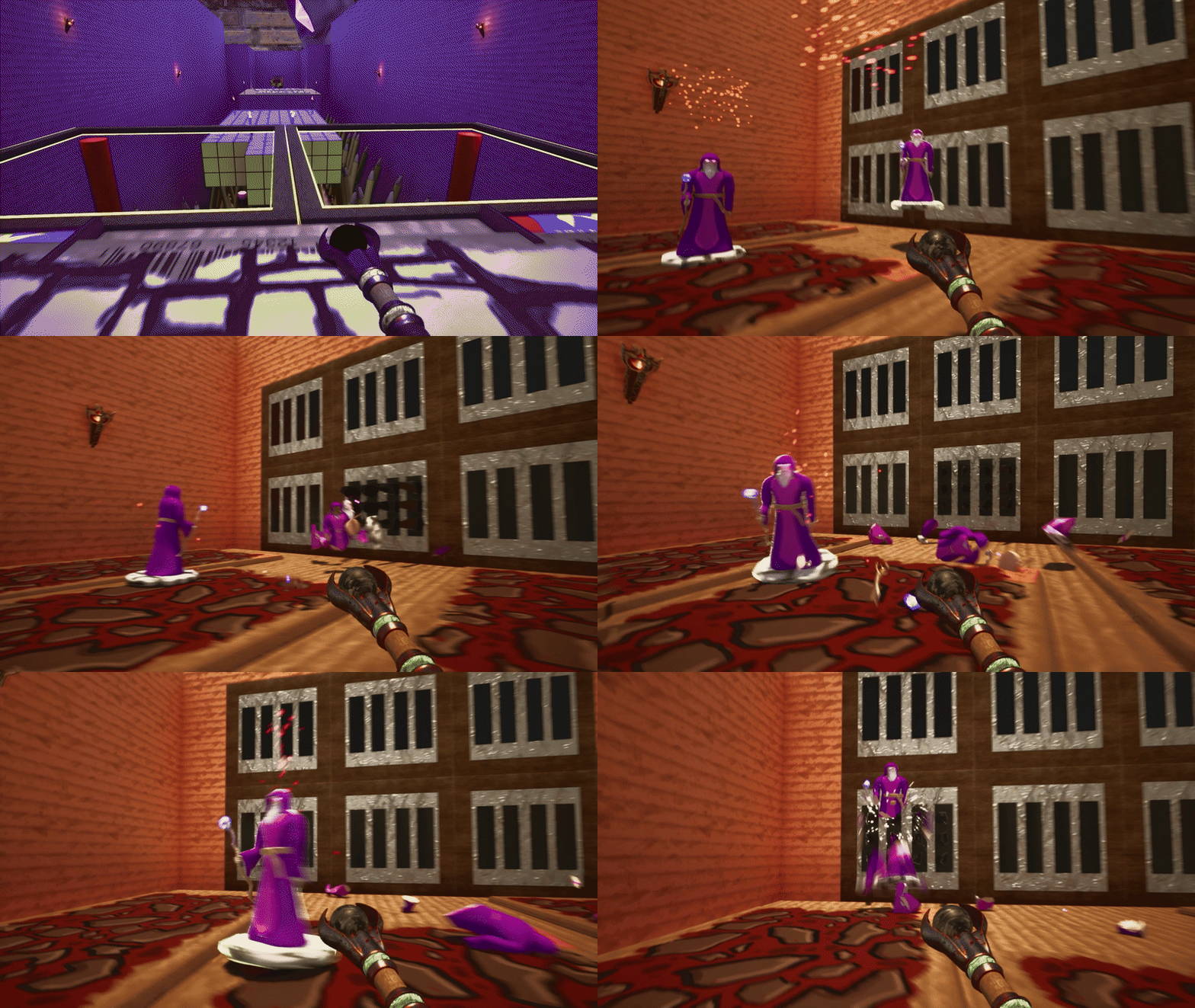
The level introduces the Wizard enemy
A short encounter allows players to safely practice pushing enemies
Dialogue and props hint at the brothers’ history, deepening emotional context
Arenas: Combine, Challenge, Synergize
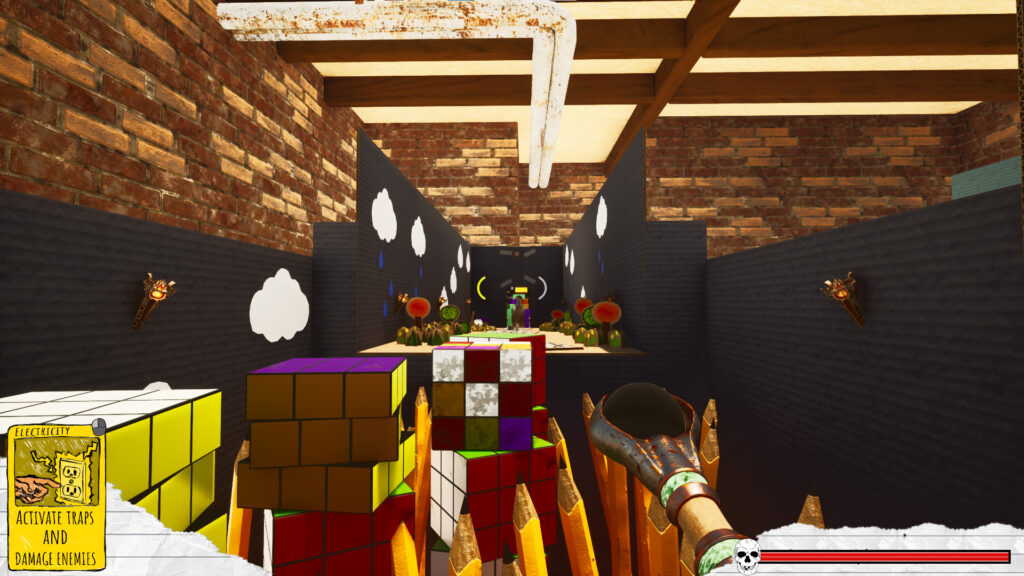
Arenas follow each Passageway, acting as full-combat scenarios where players must combine new skills with those they’ve already mastered. These spaces are framed as new biomes, marked visually with distinct cardboard-based set changes.
Example (Level 2):
Use Wind to push Wizard enemies into pitfall traps
Activate Tesla traps with the Lightning Card
Create layered synergies that reward tactical thinking
Reinforce the design pillar: Mind Over Might, smart play over brute force
Narrative Design
Turning Story into Gameplay
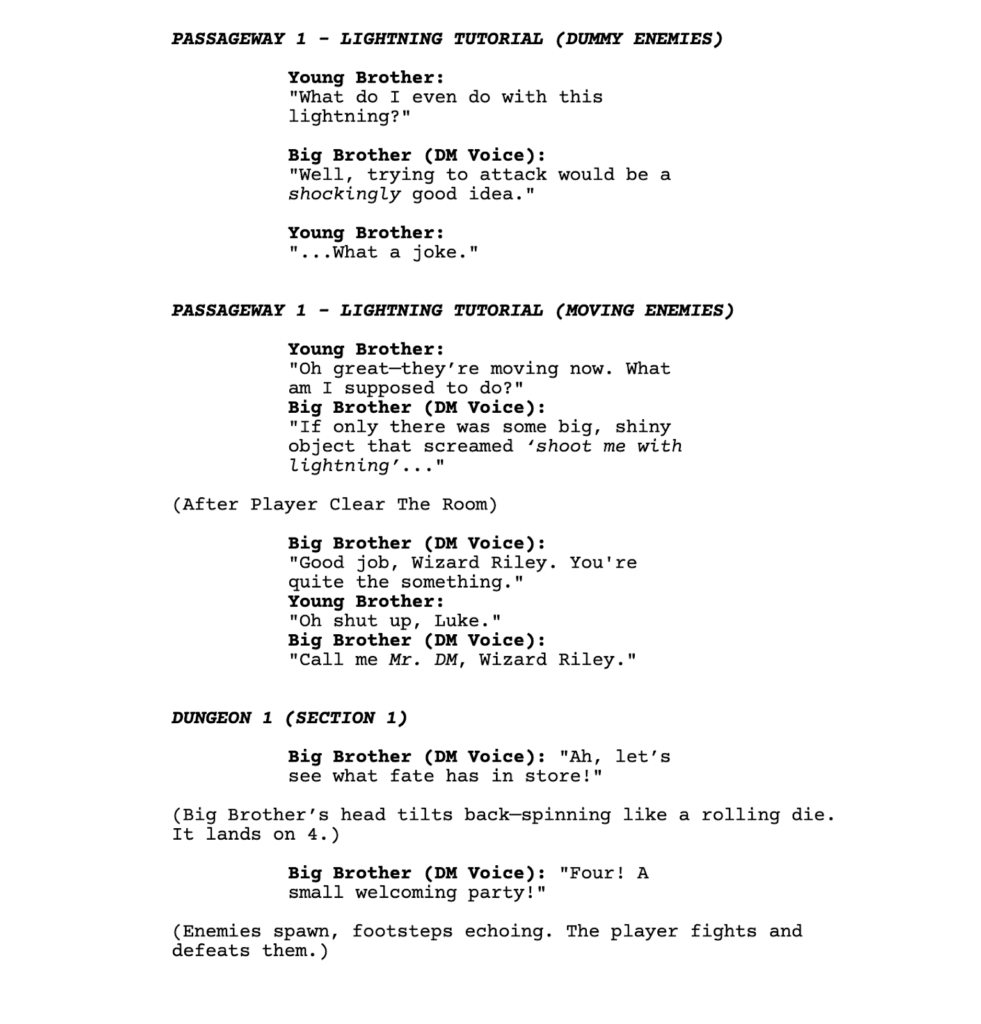
In the early versions of the script for One More Dungeon, story and gameplay were treated as separate tracks. Dialogue often appeared between gameplay moments, creating a visible wall between interaction and narrative. While functional, this structure felt disconnected.
Based on feedback and iteration, I restructured the narrative to become the engine for gameplay. Story wasn’t just something the player heard it became something they played. Dialogue and emotional moments were used to trigger mechanics, alter the environment, and introduce new challenges, making the experience feel alive and reactive.
This shift led to some of the game’s most memorable moments, like the Birthday Card Event and the Bridge Destruction, where narrative and mechanics work in sync to create emotionally resonant gameplay. These moments set the tone for how story and interaction evolve throughout the experience.
Birthday Card Event
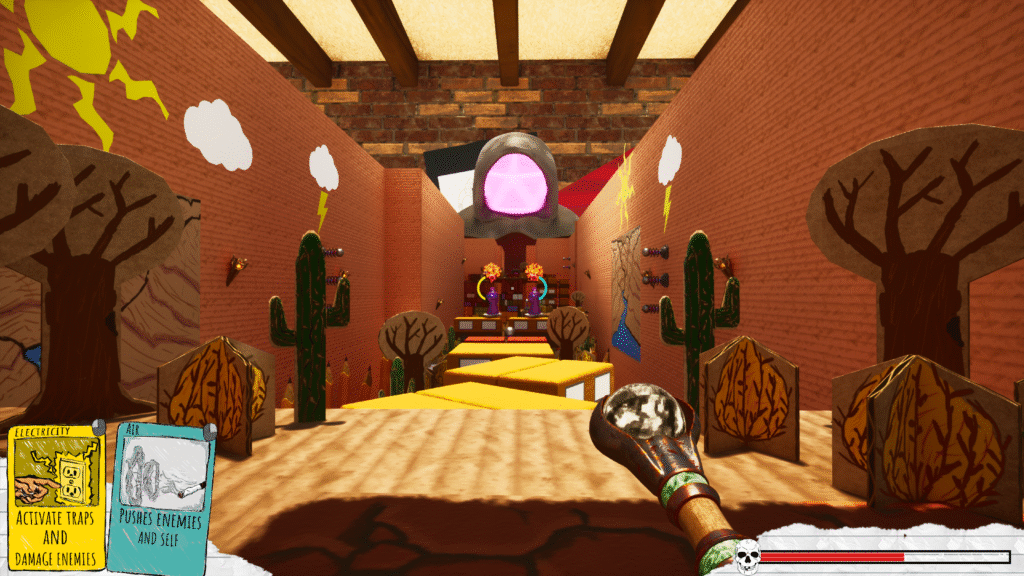
While chasing the Wind Card in a passageway, the player (Riley, the younger brother) is met with a familiar frustration: the card floats just out of reach. Riley vents, annoyed that his older brother—playing the Dungeon Master—is making things harder on purpose, like always.
But then the tone shifts.
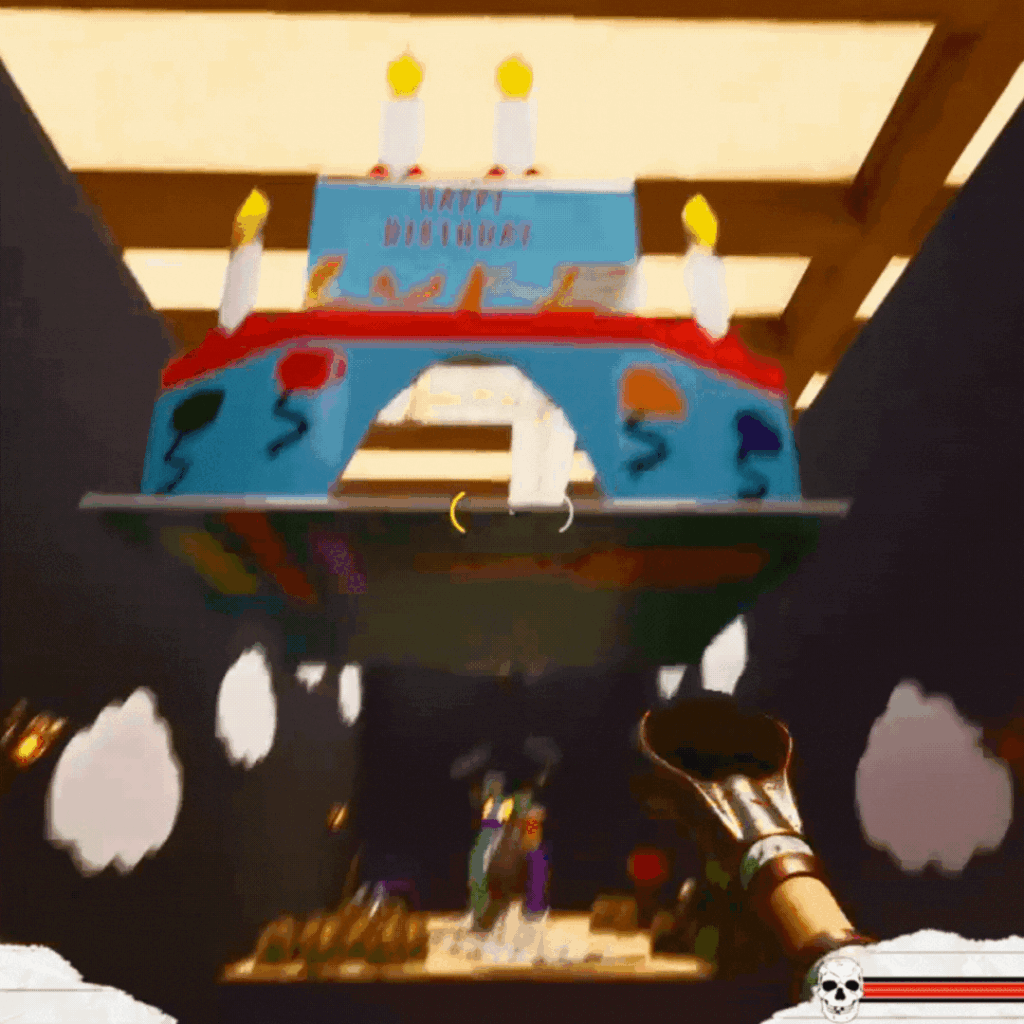
A Letter floats down and unfolds mid-air: a birthday letter Riley gave his brother years ago. It forms a bridge across the gap. For the first time, Riley realizes the Dungeon Master kept it.
Young Brother (softly): “You… kept this?”
Big Brother (gently, still in DM voice): “This dungeon remembers more than you think, Wizard Riley.”
With this moment, the player gains the Jump Boost ability, using a memory as a literal bridge forward.
Why it works:
Narratively, it cracks the Dungeon Master’s emotional armor and makes Riley question his assumptions.
Mechanically, it transforms a heartfelt memory into a physical, traversable bridge.
Tonally, it captures a sibling dynamic: sarcasm, surprise, and something unspoken finally surfacing.
This became one of our strongest examples of story-creating gameplay, not just sitting beside it.
The Bridge Destruction Event
Dialogue-Driven Environment Shift
As Riley reaches the final stretch of the dungeon, the door comes into view. The Dungeon Master sets the stage with a dramatic tone:
Big Brother (DM Voice): “You’ve made it, Wizard Riley… the final stretch.”
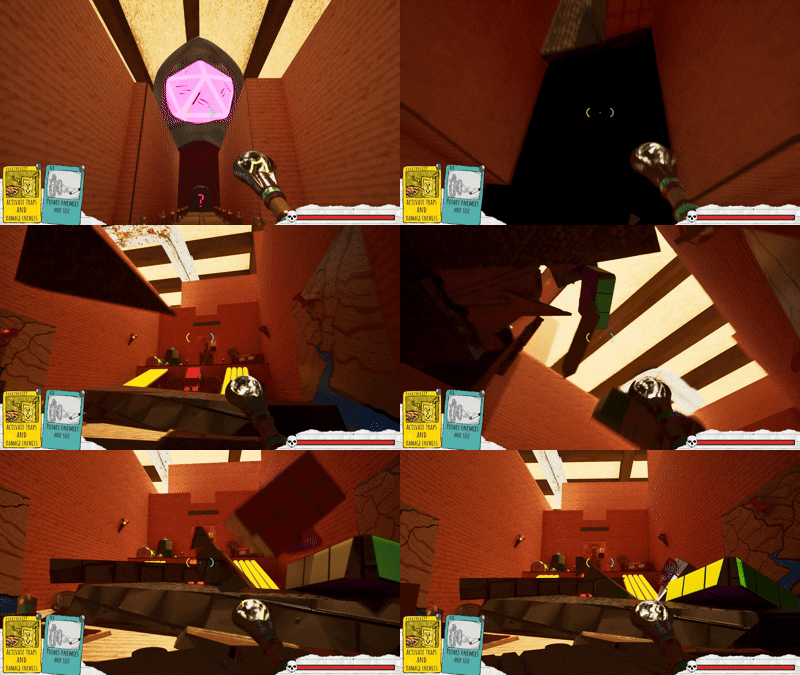
Riley begins platforming across rusted train cars toward the goal, until the final car disappears beneath his feet and drops him into a lower canyon. No cutscene, no warning, just pure in-game reaction.
Young Brother: “HEY! I was really close!”
Big Brother (DM Voice, smirking): “No easy ending in my dungeon, Wizard Riley.”
Why it works:
Narratively, it uses brotherly teasing and control to reflect their push-pull dynamic.
Structurally, it turns dialogue into an in-game event, reinforcing that the DM isn’t just talking he’s changing the world.