Overview
Rampage Reset is a first-person puzzle game where players navigate a mysterious facility by solving spatial and logic-based challenges. Each level introduces new environmental tools like red posters to lure a rampaging monster and electric barriers to block its path or protect key doors, turning enemy behavior into part of the puzzle.
As the game progresses, players must observe, adapt, and creatively use these mechanics to open paths and lure the monster toward its own destruction.
Level Design
Designing Across Timelines: Before & After the Rampage
Designing levels for a time-traveling puzzle game meant planning around two distinct timelines: before and after the monster’s rampage. My level layouts captured both phases clearly showing how the environment shifts, what elements are destroyed, and how player paths change as a result.
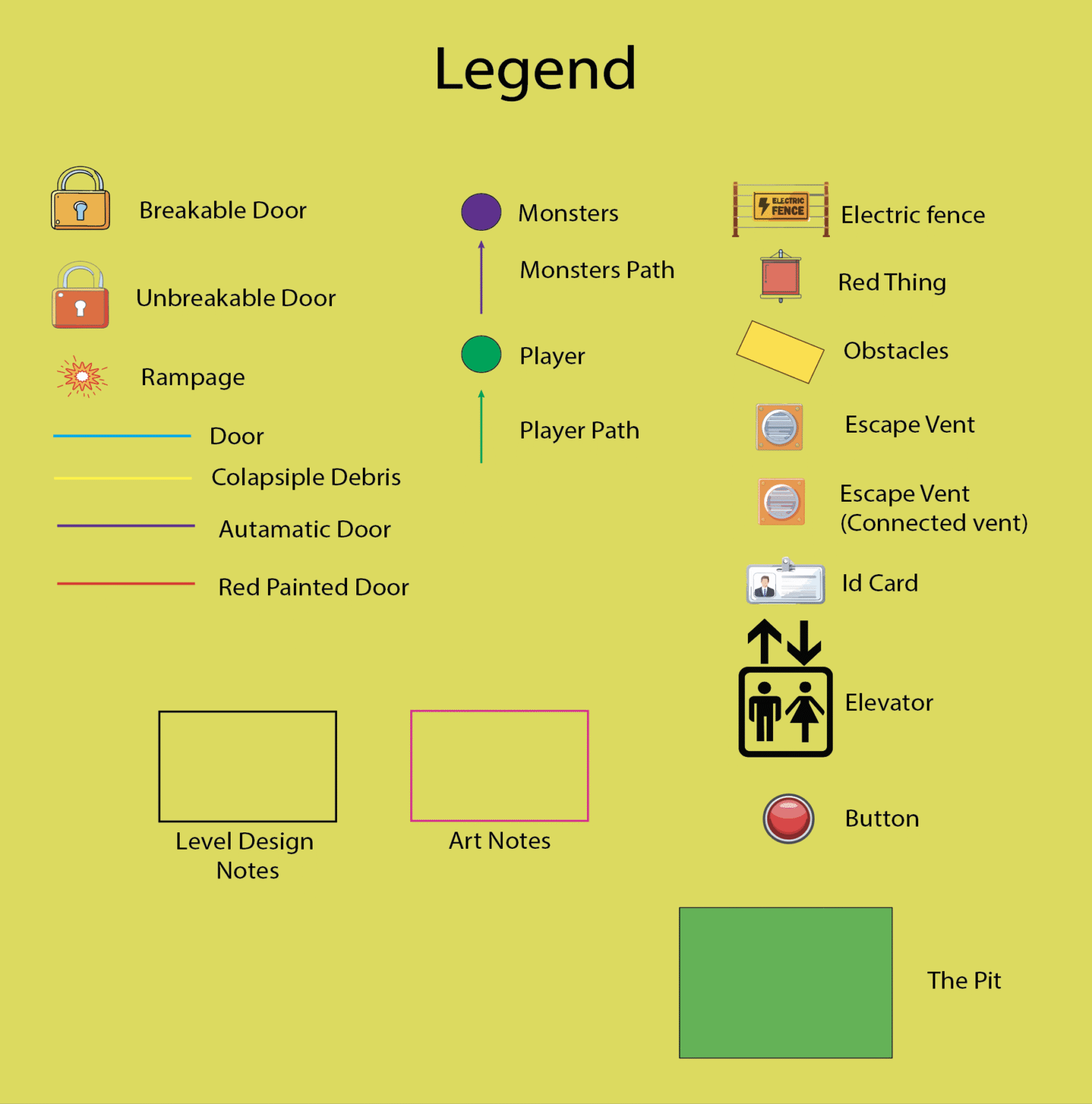
Because the core mechanic involved a monster the player never directly sees, it was essential to visualize how the monster’s unseen movement would open paths. Luring it into the right spots to trigger puzzle progression was an abstract idea, so creating highly detailed layouts was critical. These diagrams helped clarify the design for the entire team, aligning our vision and making complex mechanics easier to implement.
These layouts didn’t just map geometry they illustrated the full puzzle flow, helping the team follow the golden path and streamlining communication across design and art.
Introducing the Core Loop: Time Swap, Rethink, Solve
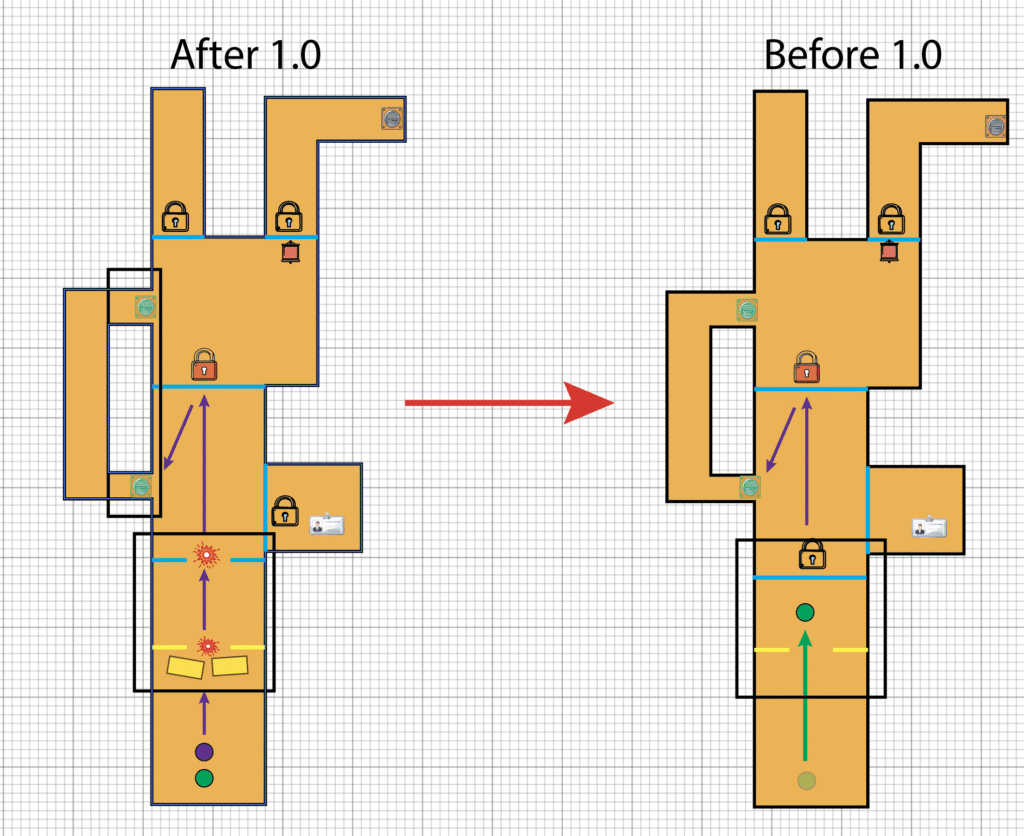
The first level of Rampage Reset introduces players to the core time travel mechanic by placing them in a blocked hallway, and wreckage from the monster’s unseen rampage prevents progress. A prompt teaches them to press E to shift to the Before timeline, where the wreckage hasn’t occurred.
Now able to move forward, players encounter a locked door that they had already seen through the wreckage at the start. This early visibility was intentional: even though it was unreachable, it planted the idea of a path. When players realize the door was destroyed in the After timeline, they can switch back using the monster’s destruction to their advantage.
This moment sets the foundation for how every puzzle in the game is meant to be approached by swapping timelines to observe changes and using spatial awareness to uncover the path forward.
From Threat to Tool
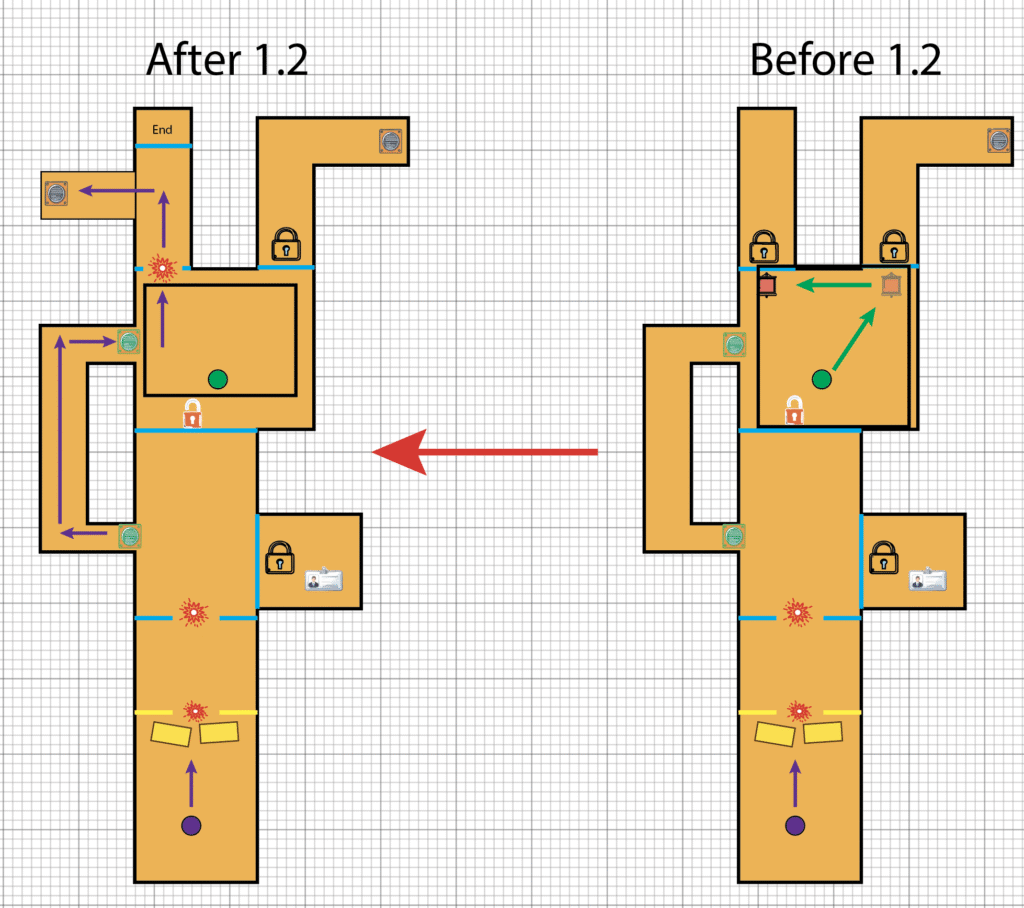
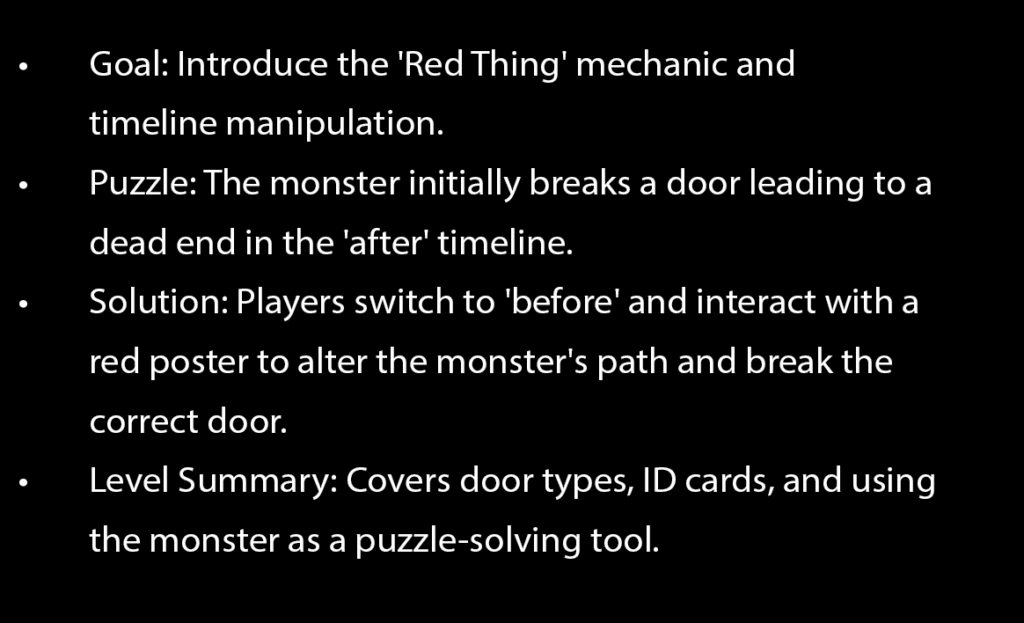
This level breaks the expectation set in Level 1, where players simply swapped timelines to bypass obstacles. Here, they face two identical doors, but only one is destroyed in the After timeline. Following it leads to a dead-end vent.
Back in the “Before” timeline, the only clue is a Red Poster on the broken door. This subtle difference teaches that the monster’s behavior can be influenced. By moving the poster to the other door, the player redirects the monster’s rampage, opening the correct path.
Why it works:
Shifts the monster from a passive threat to a tool the player can guide
Introduces player agency through environmental manipulation
Reinforces that puzzles aren’t just about timeline swapping—they’re about setting up the future
This moment reframes the monster not as something to avoid, but something to use.